
HPL Lamination Solutions for Surface Quality and Production Efficiency
HPL Short-Cycle Pressing Press Plate enables a high-efficiency lamination process that cuts pressing time significantly, while retaining stable panel quality and bonding strength. The solution boosts production speed, optimizes thermal performance and ensures uniform quality for mass HPL manufacturing.
Short Cycle Pressing Process Overview
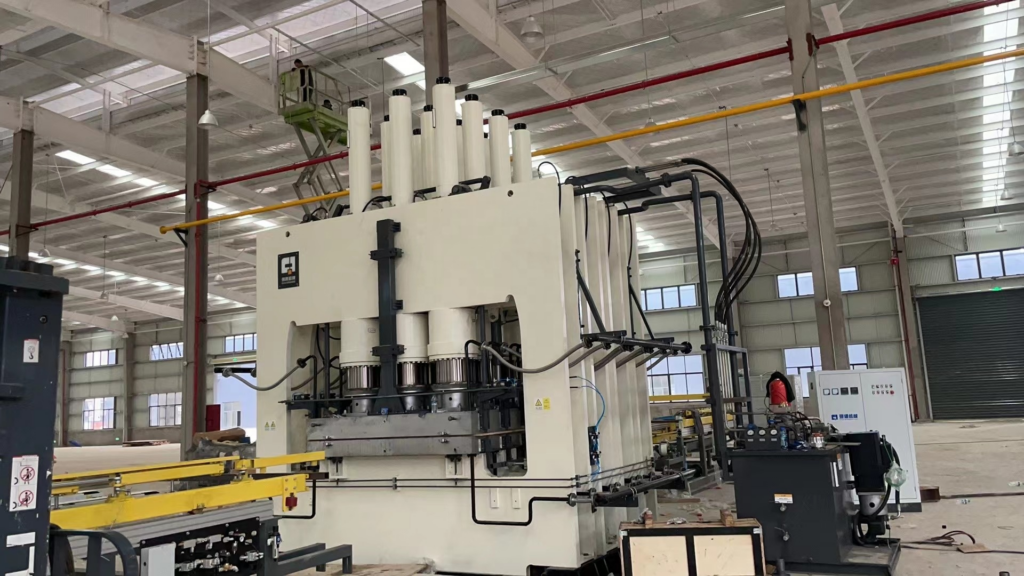
The process typically involves:
- Material loading
- Rapid heating
- Resin curing
- Surface formation
- Cooling and unloading
hort cycle pressing combines decorative paper, substrate boards, and wear-resistant layers under controlled heat and pressure.
Unlike conventional HPL production, where pressing cycles may take several minutes, short cycle presses often operate within seconds.
Because heating time represents a significant portion of the total cycle, improving thermal transfer directly increases production efficiency.
Why Heat Transfer Efficiency Matters
In short cycle production, every second affects productivity.
Heat must be transferred from the heated platen through the press plate and into the laminate structure as quickly and uniformly as possible.
When heat transfer is inefficient, manufacturers often experience:
- Longer press cycles
- Reduced production capacity
- Higher energy consumption
- Incomplete resin curing
- Temperature inconsistency across panels
Improving thermal conductivity enables faster heating without sacrificing product quality.
Common Production Challenges
As production speeds increase, heat-related issues become more noticeable.
- Slow Heating Response
Insufficient heat transfer delays resin activation and curing.
- Uneven Temperature Distribution
Temperature differences across the press surface create inconsistent curing conditions.
- Extended Cycle Times
Longer heating periods reduce daily production output.
- Increased Energy Consumption
Additional heating time requires more energy for each production cycle.
- Production Bottlenecks
When heating becomes the limiting factor, overall equipment utilization decreases.
Root Causes of Heating Inefficiency
Many production problems originate from thermal transfer limitations rather than the press itself.
Poor Thermal Conductivity
Heat cannot move efficiently through the pressing system..
Temperature Variations Across the Plate
Uneven heat distribution creates hot spots and cold spots.
Delayed Heat Response
Press plates with slower thermal response require longer heating periods.
Heat Loss During Production
Inefficient heat transfer increases energy waste and prolongs production cycles.
ZORI PRESS PLATE solutions
Key characteristics
High thermal conductivity
Accelerates heat flow from the press to the laminate
Fast heating response
Helps the press reach operating temperature more quickly.
Uniform temperature distribution
aintain consistent pressure and temperature during continuous production to reduce process fluctuations.
Stable thermal cycling performance
oper press plate selection and maintenance help reduce wear, minimize downtime, and improve overall production reliability.
Production Efficiency Improvements
By improving heat transfer efficiency, manufacturers can achieve measurable productivity gains.
| Indicator | Typical Improvement |
|---|---|
| Heating response speed | +10–20% |
| Press cycle time | −10–20% |
| Daily production output | +10–18% |
| Temperature uniformity | ≤ ±2–3°C |
| Energy consumption per panel | −5–12% |
| Production stability | Significantly improved |
For short cycle HPL production, heat transfer efficiency is directly linked to productivity. Faster and more uniform heating allows manufacturers to reduce cycle time, increase daily output, lower energy consumption, and maintain stable product quality during high-speed continuous production.