
HPL Lamination Solutions for Surface Quality and Production Efficiency
Laminate Press Plate for HPL Solution optimizes decorative HPL production conditions. It boosts thermal control precision, pressure uniformity and panel quality consistency, and resolves common issues like blistering, delamination and uneven texture depth via refined press plate structure and full-process control.
HPL Lamination Process Overview
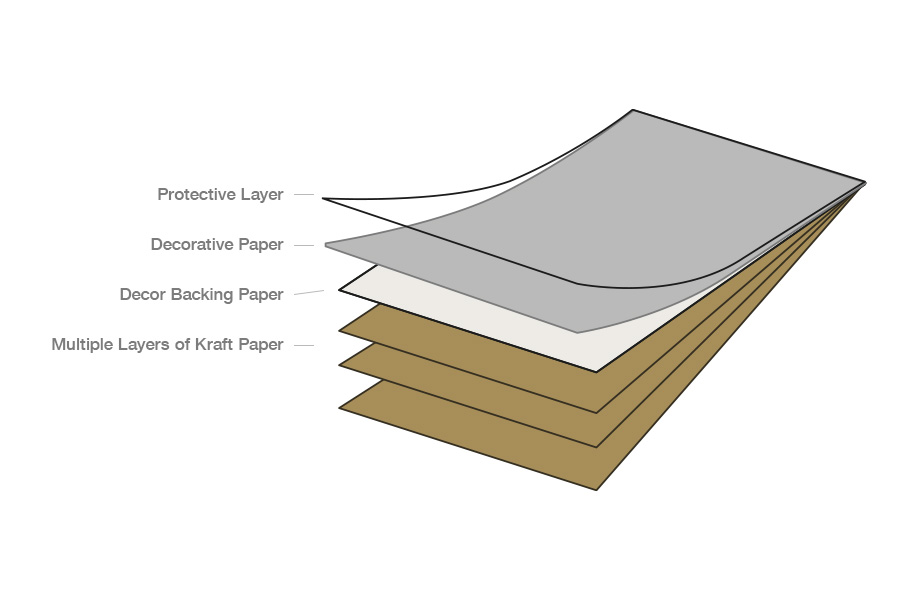
High Pressure Laminate (HPL) lamination is a manufacturing process that bonds multiple layers of kraft paper and decorative paper under high temperature and pressure to produce durable decorative panels. Throughout the pressing cycle, the press plate plays a critical role in transferring pressure, heat, and surface texture while maintaining dimensional stability.
Common Production Challenges
- Surface Gloss Variation Creates inconsistent product appearance, caused by uneven finish across the press plate surface.
- Uneven Texture Transfer Leads to visible decorative defects, resulting from worn embossing surfaces on press plates.
- Poor Flatness Triggers finished panel deformation, originating from structural deformation of the press plate.
- Surface Scratches Causes extra rework and raw material waste, due to damaged working surfaces of plates.
- Uneven Heat Distribution Lengthens required pressing cycles, driven by insufficient thermal uniformity within the press plate.
Critical Process Parameters
Consistent HPL production depends on maintaining stable process conditions throughout every pressing cycle.
Temperature Control
Stable heating improves resin curing consistency and decorative surface quality.
Pressure Distribution
Uniform pressure helps achieve consistent panel thickness and accurate texture transfer.
Pressing Time
Proper cycle time ensures complete resin curing without affecting productivity.
Cooling Stability
Controlled cooling minimizes residual stress and improves panel dimensional stability.
ZORI PRESS PLATE solutions
Process Optimization Solutions
Effective process optimization requires balancing equipment settings, process parameters, and press plate performance.
Improve Surface Consistency
Reduce gloss variation and decorative defects through stable pressing conditions and consistent surface contact.
Enhance Heat Transfer Efficiency
Optimize heat transfer to shorten pressing cycles while maintaining product quality.
Increase Process Stability
Maintain consistent pressure and temperature during continuous production to reduce process fluctuations.
Extend Equipment Service Life
Proper press plate selection and maintenance help reduce wear, minimize downtime, and improve overall production reliability.
Recommended Press Plate Characteristics
Recommended Characteristic Production Benefit High flatness Uniform panel thickness Stable hardness Longer service life Excellent surface finish Better decorative appearance Uniform heat transfer Stable pressing performance High wear resistance Reduced maintenance frequency Dimensional stability Consistent production quality
Expected Production Benefits
A properly optimized HPL lamination process can deliver measurable improvements throughout production.
✔ More consistent decorative surfaces
✔ Improved panel flatness
✔ Stable production quality
✔ Reduced maintenance frequency
✔ Longer press plate service life
✔ Higher production efficiency