
High Tg CCL Press Plates for Thermal Stability
High TG CCL Lamination serves electronic components that operate under harsh working conditions. This article elaborates on the performance requirements of matched press plates, enabling them to withstand higher processing temperatures and preserve stable dimensional performance of copper clad laminates.
What Is High TG CCL
High Tg Copper Clad Laminate refers to laminate materials with a glass transition temperature (Tg) typically above 170°C, compared with approximately 130–140°C for conventional FR4 materials.
These laminates provide:
- Better thermal resistance
- Lower thermal expansion
- Higher dimensional stability
- Improved multilayer reliability
- Better soldering performance
High Tg CCL is widely used in:
- Automotive electronics
- AI servers
- Industrial control systems
- 5G communication equipment
- High-speed networking devices
- Aerospace electronics
Because the resin system requires higher curing temperatures, the lamination process becomes considerably more demanding than conventional PCB production.
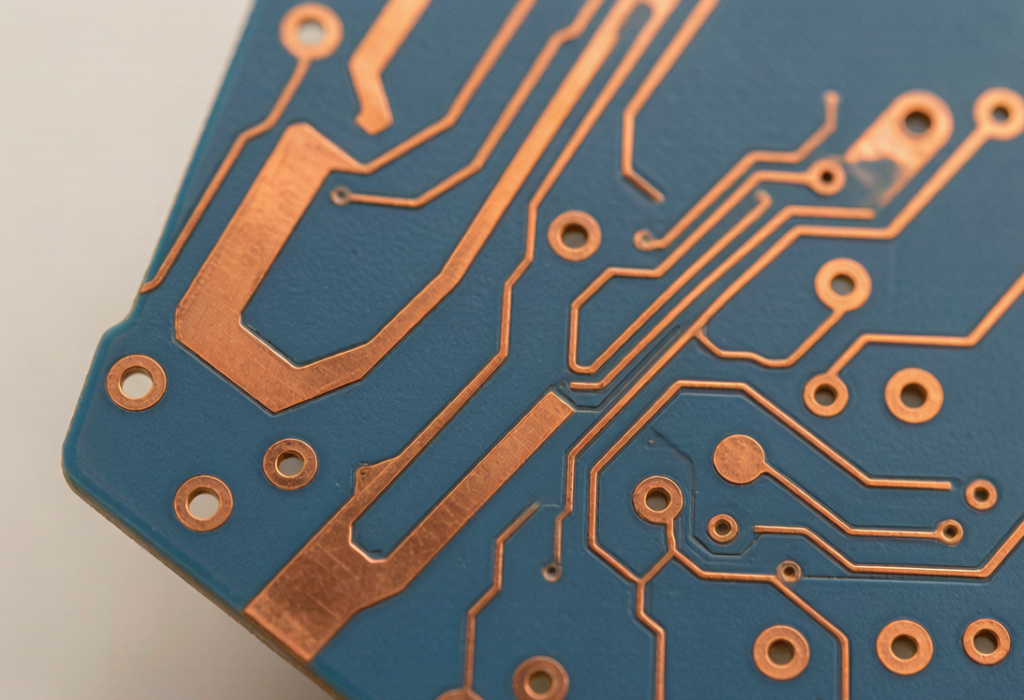
High Temperature Challenges
Uniform pressure distribution stands as a core decisive factor for all multilayer lamination workflows. When heat and pressure spread evenly over the full material stack, every layer achieves equal compaction. This balanced state guides steady resin flow and delivers robust, dependable adhesion between copper foil and prepreg sheets.
During High Tg CCL lamination, the press system operates under higher temperatures and longer thermal cycles.
These conditions often introduce critical manufacturing challenges.
| Production Challenge | Typical Result |
|---|---|
| Higher curing temperature | Increased thermal stress |
| Uneven heat transfer | Incomplete resin curing |
| Temperature gradients | Localized warpage |
| Thermal expansion mismatch | Registration deviation |
| Repeated heating cycles | Press plate deformation |
| Longer heating time | Reduced production efficiency |
Even small temperature differences across the press opening can significantly affect resin flow, copper bonding, and multilayer alignment.
Why High Tg Lamination Becomes More Difficult
High Tg resin systems require more energy to reach full polymerization.
As lamination temperatures increase, thermal expansion of steel plates also increases. If the press plate cannot maintain flatness and dimensional stability, pressure distribution becomes uneven, resulting in inconsistent panel quality.
Common root causes include:
- Thermal Expansion
Higher temperatures increase steel expansion, affecting multilayer registration.
- Heat Distribution
Non-uniform heat transfer delays resin curing in cooler regions while over-curing hotter areas.
- Pressure Uniformity
Thermal deformation changes pressure distribution across the entire press opening.
- Repeated Thermal Cycling
Continuous production causes gradual deformation of conventional press plates, reducing process consistency.
Process Control Solution
Excellent Thermal Conductivity
- Temperature variation reduced to ≤ ±2°C
- Faster heating response
- More consistent resin curing
High Thermal Stability
- Stable panel dimensions
- Better multilayer registration
- Lower internal stress
Superior Surface Flatness
- Surface waviness
- Thickness variation
- Panel distortion
Uniform Pressure Distribution
- Improved resin flow
- Reduced void formation
- Better copper bonding
Long-Term Dimensional Stability
Designed for repeated high-temperature production without permanent deformation. Suitable for continuous mass production of High Tg laminates.
Quality Benefits
By improving thermal stability throughout the lamination process, manufacturers can achieve measurable improvements in both product quality and production efficiency.
| Performance Indicator | Conventional Press Plate | Optimized High Tg Press Plate |
| Temperature Uniformity | ±6–8°C | ≤ ±2°C |
| Panel Flatness | Baseline | Improved by 30–50% |
| Registration Accuracy | Baseline | Improved by 20–40% |
| Resin Cure Consistency | Medium | High |
| Delamination Risk | Higher | Reduced by 30–50% |
| Lamination Defect Rate | Baseline | Reduced by 20–40% |
| Production Yield | 92–95% | 97–99% |
Performance data represent typical industry improvements. Actual results depend on laminate design, equipment configuration, process parameters, and production conditions.
Recommended Bottom CTA
Improve High Tg CCL Lamination Stability
Whether producing automotive-grade, high-speed, or industrial High Tg laminates, selecting the right press plate is essential for maintaining temperature uniformity, dimensional accuracy, and long-term process consistency.
Our engineering team can recommend the optimal press plate specification based on your lamination temperature, press cycle, panel size, and production requirements to help maximize yield and minimize defects.