
PCB Lamination Solutions for Warpage Reduction and Process Stability
PCB Lamination Solution is engineered to enhance multilayer PCB manufacturing processes, effectively resolving core challenges such as warpage, interlayer delamination, and board thickness tolerance deviation. By leveraging optimized press plate performance and a refined lay-up management system, this solution empowers factories to achieve higher precision and consistently stable yields in PCB production.
PCB Lamination Process Overview
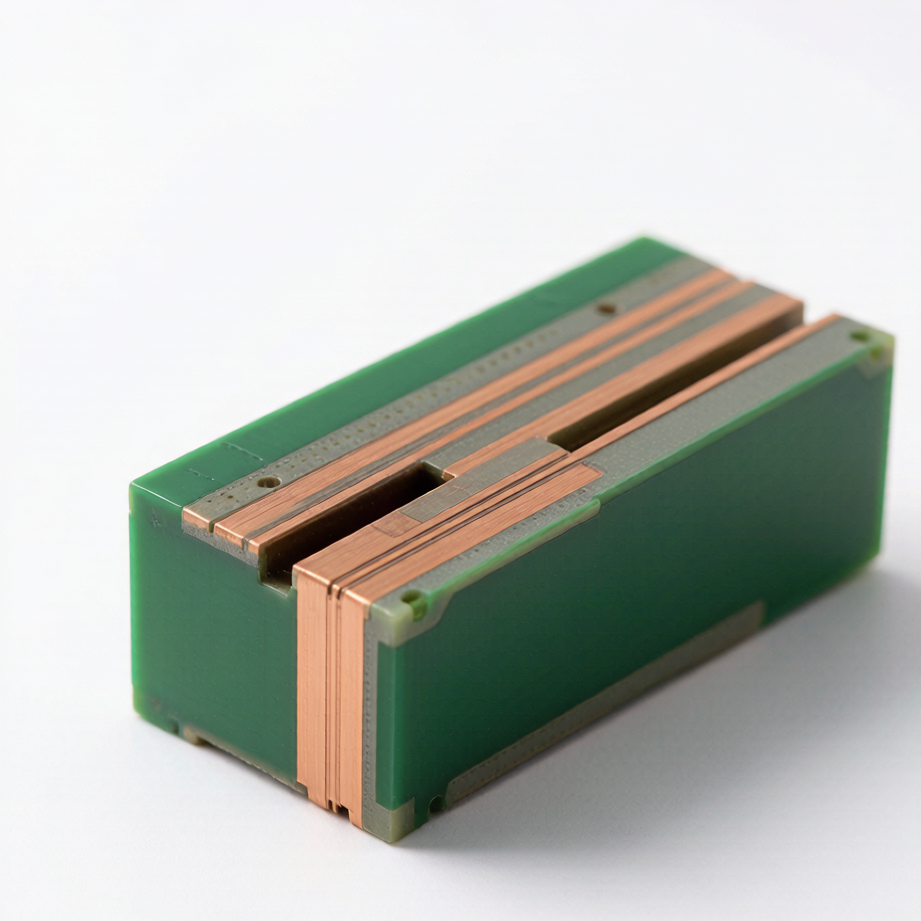
PCB lamination is a controlled thermal compression process that permanently bonds multiple materials into a single laminate structure.
A typical lamination process includes:
- Core material preparation
- Copper foil and prepreg stacking
- Lay-up alignment
- Vacuum pressing
- Heating and resin curing
- Cooling under pressure
- Panel inspection
Throughout these stages, the press plate serves as the direct interface between the press equipment and the laminate stack, ensuring that heat and pressure are transmitted consistently across the entire panel.
Why Lamination Process Stability Matters
A stable lamination process is essential for maintaining product consistency across every production cycle.
Process stability influences:
- Consistent panel dimensions
- Reliable interlayer bonding
- Uniform resin curing
- Stable panel flatness
- Predictable electrical performance
- High production yield
- Repeatable manufacturing quality
When any part of the lamination process becomes unstable, defects introduced at this stage often continue into drilling, plating, imaging, and final PCB assembly, increasing rework and production costs.
Critical Process Control Factors
Successful PCB lamination depends on balancing several key process variables. Each factor contributes to overall manufacturing stability.
Temperature Control
Uniform heating ensures complete resin curing while minimizing thermal stress throughout the laminate.
Pressure Distribution
Even pressure allows resin to flow uniformly and promotes consistent bonding between copper foil and core materials.
Vacuum Performance
Effective vacuum removes trapped air and moisture before curing, helping reduce internal voids and improve laminate integrity.
Cooling Stability
Controlled cooling minimizes residual stress and helps maintain stable panel geometry after lamination.
Common Lamination Challenges
As PCB designs become more complex, maintaining stable lamination conditions becomes increasingly challenging.
| Manufacturing Challenge | Production Impact |
|---|---|
| Temperature fluctuation | Inconsistent resin curing |
| Uneven pressure distribution | Variable bonding quality |
| Stack movement during pressing | Reduced manufacturing accuracy |
| Inadequate vacuum | Internal voids and trapped air |
| Cooling inconsistency | Residual stress and panel distortion |
| Process variation between production cycles | Lower repeatability and reduced yield |
How Press Plates Improve Process Stability
Press plates are more than pressure transmission components—they are critical process control tools that help stabilize the entire lamination cycle.
| Press Plate Characteristic | Manufacturing Benefit |
|---|---|
| High flatness | Uniform contact across the laminate stack |
| Excellent thermal conductivity | Faster and more consistent heat transfer |
| Uniform pressure transmission | Balanced resin flow and reliable bonding |
| High dimensional stability | Stable performance during repeated lamination cycles |
| Wear-resistant surface | Consistent process quality over long production runs |
By maintaining stable heat transfer and pressure distribution, precision press plates contribute to a more predictable lamination process and improved manufacturing consistency.
ZORI PRESS PLATE solutions
PCB Lamination Solutions by Application
Different PCB products present different manufacturing priorities. Our lamination solutions are designed to address the specific requirements of each production process.
FR4 PCB Lamination
Focus: Dimensional Stability
Designed for standard multilayer PCB production where maintaining panel dimensions, flatness, and geometric consistency is essential for downstream processing.
Key Benefits
- Improved dimensional accuracy
- Better panel flatness
- Stable production consistency
➡ Learn more about FR4 PCB Lamination
Multilayer PCB Lamination
Focus: Layer Registration Accuracy
Engineered for complex multilayer PCBs requiring precise alignment between conductive layers to support high-density circuit designs.
Key Benefits
- Improved layer registration
- Reduced layer shift
- Enhanced interlayer reliability
➡ Learn more about Multilayer PCB Lamination
Typical Process Improvements
A stable lamination process creates measurable improvements throughout PCB production.
| Manufacturing Indicator | Typical Improvement |
|---|---|
| Process repeatability | Improved |
| Heat and pressure consistency | Improved |
| Production stability | Increased |
| Manufacturing yield | Increased by 3–5% |
| Scrap rate | Reduced by 15–25% |
| Batch-to-batch consistency | Improved |
Performance improvements shown are representative industry values. Actual results depend on laminate construction, press equipment, production parameters, and process conditions.